
 ES
ES  RU
RU  TR
TR  FA
FA  AR
AR  ZH
ZH Blog
Blog description

OFAC 50 Percent Rule: Ownership Aggregation, SDN Risk, and Sanctions Compliance Strategy
The OFAC 50 Percent Rule is a foundational doctrine of U.S. sanctions enforcement. It provides that any entity owned, directly or indirectly, 50 percent or more in the aggregate by one or more blocked persons is itself treated as a blocked person. Even if the entity does not appear on the SDN List.
Administered by the U.S. Department of the Treasury’s Office of Foreign Assets Control (OFAC), the rule significantly expands sanctions exposure beyond publicly listed names to encompass corporate ownership structures, multi-tier subsidiaries, joint ventures, and investment vehicles.
For financial institutions, hedge funds, private equity sponsors, asset managers, exporters, compliance officers, and multinational enterprises, the rule transforms sanctions compliance from simple list screening into sophisticated beneficial ownership tracing, in a strict-liability enforcement environment.
I. Statutory Authority and Regulatory Context
OFAC’s blocking and licensing authorities derive primarily from:
- International Emergency Economic Powers Act (IEEPA)
- Trading with the Enemy Act (TWEA)
Under these statutes, OFAC may:
- Block property and interests in property of designated persons
- Prohibit transactions involving blocked persons
- Impose civil penalties under a strict-liability regime
The 50 Percent Rule was articulated through OFAC interpretive guidance to prevent designated persons from evading sanctions by restructuring holdings into subsidiaries or layered vehicles not expressly named on sanctions lists.
II. The Core Legal Standard
The rule provides:
An entity is considered blocked if it is owned 50 percent or more, directly or indirectly, in the aggregate by one or more blocked persons.
Four technical elements are critical:
- Aggregate ownership — multiple SDNs’ interests are combined
- Direct or indirect ownership — ownership flows through corporate tiers
- Automatic blocking effect — no separate designation required
- Strict liability enforcement — intent or knowledge is not required for civil violation
III. Ownership Aggregation: Technical Analysis
A. Aggregation Across Multiple SDNs
Ownership interests of multiple blocked persons are combined.
Example:
- SDN A owns 30%
- SDN B owns 25%
Aggregate ownership: 55% → Entity is blocked.
Notably, individual control is irrelevant. Aggregate ownership alone determines blocking status.
B. Indirect Ownership Through Corporate Tiers
Ownership must be calculated through intermediate entities.
Example:
- SDN owns 70% of Holding Company A
- Holding Company A owns 80% of Operating Company B
Because SDN ownership exceeds 50% in Company A, Company A is blocked.
Operating Company B inherits blocked status because it is majority-owned by a blocked entity.
This cascading effect requires deep structural diligence.
C. Multiplication and Aggregation in Complex Structures
Ownership is traced through each tier:
If:
- SDN owns 60% of Entity A
- Entity A owns 60% of Entity B
Effective SDN ownership in Entity B:
60% × 60% = 36%
If additional SDNs own independent stakes in Entity B, all stakes are aggregated.
Compliance teams must therefore:
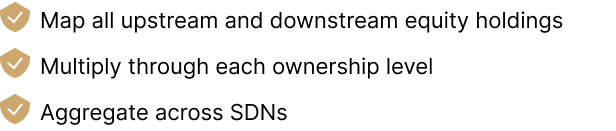
Failure to do so creates hidden liability exposure.
IV. What the Rule Does Not Cover
A. Control Without 50% Ownership
The 50 Percent Rule is ownership-based. An SDN owning 49% does not automatically block the entity.
However:
- OFAC retains authority to separately designate entities controlled by SDNs.
- Transactions involving such entities present enhanced enforcement risk.
Thus, 49% ownership does not equal zero risk.
B. Minority Passive Shareholders
An SDN holding a small passive interest, absent aggregation with other blocked persons, does not automatically trigger blocking.
Nevertheless, additional exposure may arise from:
- Facilitation prohibitions
- Prohibited dealings with blocked persons
- Sectoral sanctions restrictions
V. High-Risk Jurisdictions and Structural Opacity
The 50 Percent Rule is particularly consequential in:
- Russia-related sanctions
- Iran sanctions
- Venezuela sanctions
- Global Magnitsky designations
In Russia-related enforcement contexts:
- Oligarch ownership often flows through Cyprus, UAE, Caribbean, or trust structures
- Nominee arrangements obscure beneficial ownership
- Shareholder registers may not reveal ultimate control
This structural opacity increases the compliance burden.
Given strict liability, insufficient due diligence does not excuse a violation.
VI. Civil Liability and Enforcement Exposure
Under IEEPA, civil penalties may reach the greater of:
- Approximately $356,000 per violation (adjusted annually), or
- Twice the value of the underlying transaction
Key enforcement realities:
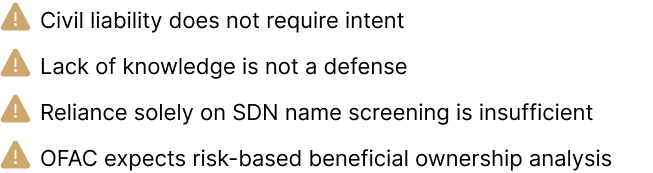
Recent enforcement trends emphasize investment funds, private equity sponsors, payment processors, and multinational corporate groups.
VII. Implications for Financial Institutions and Asset Managers
For hedge funds, private equity firms, and banks:
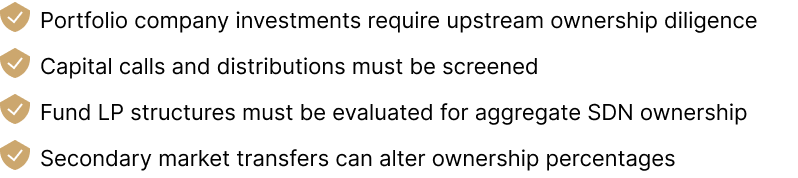
Sanctions exposure may arise not only at investment entry, but throughout the lifecycle of a transaction.
VIII. Transaction-Specific Risk Areas
The 50 Percent Rule frequently arises in:
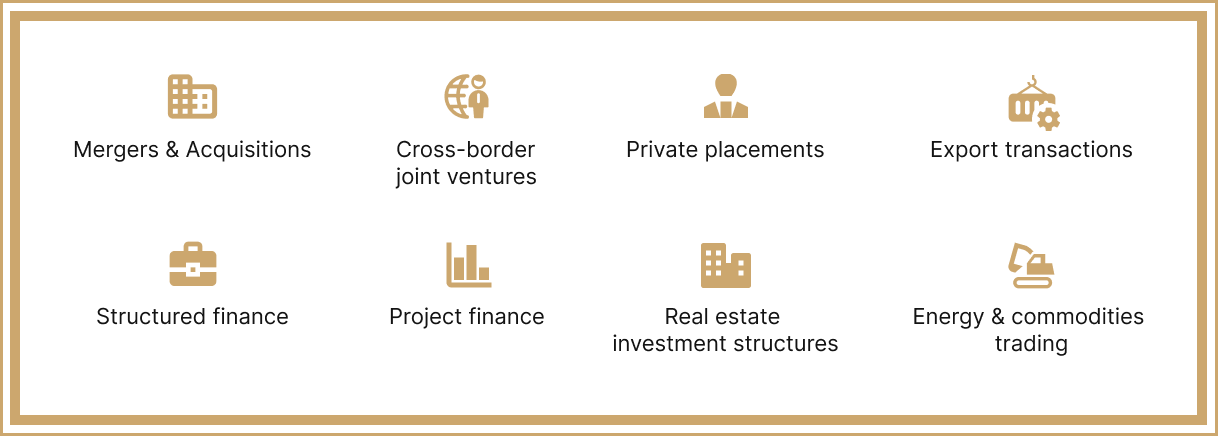
In each case, ownership tracing must precede execution.
IX. Compliance Architecture: Best Practices
A defensible compliance program should include:
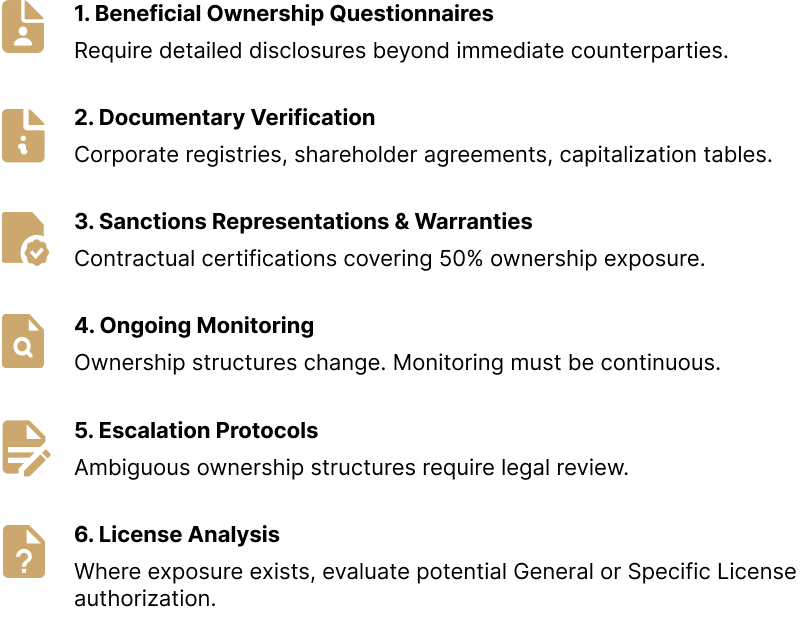
Name screening software alone is inadequate.
X. Frequently Asked Questions (Expanded)
1. Does OFAC publish automatically blocked entities?
No. There is no comprehensive public registry of entities blocked under the 50 Percent Rule.
2. What if SDN ownership equals exactly 50%?
If aggregate ownership reaches or exceeds 50%, the entity is considered blocked.
3. Does the rule apply to publicly traded companies?
Yes. Aggregated shareholding by SDNs at or above 50% results in blocked status.
4. What about fluctuating ownership percentages?
Ownership should be evaluated at the time of the transaction. Material changes post-transaction may also create exposure.
5. Does the rule apply outside the United States?
Yes. U.S. persons worldwide are subject to the rule. Transactions touching U.S. jurisdiction (e.g., USD clearing through U.S. banks) also trigger exposure.
6. Is knowledge required?
No. OFAC civil enforcement is a strict liability.
7. What is the most common enforcement failure?
Over-reliance on SDN name screening without beneficial ownership tracing.
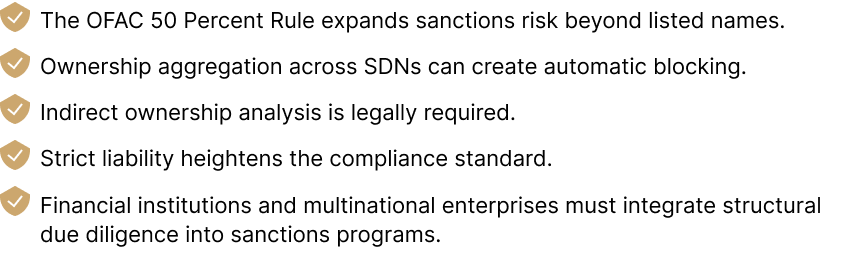
XI. Key Strategic Takeaways
Conclusion
The OFAC 50 Percent Rule fundamentally reshapes sanctions compliance. It demands structural transparency and proactive ownership analysis, particularly in high-risk jurisdictions and complex investment structures.
In today’s enforcement climate, failure to implement robust beneficial ownership tracing mechanisms can result in blocked funds, transaction unwinds, civil penalties, and reputational harm.
For organizations operating in cross-border finance, trade, or investment, ownership due diligence is not merely a compliance recommendation: it is a legal necessity under U.S. sanctions law.